Last Updated on September 2, 2026 by Umar Farooq
A 4C or 4E is a timeout, not a diagnosis. Samsung’s own wording for this code family is “Water is not entering the washer correctly” — a description of an outcome, not of a broken part (Samsung washing machine information and error codes). The control board called for water, waited for the level to rise by the amount it expected, and gave up when it didn’t. That is the entire content of the message. A faucet turned a quarter open, a hose pinched against the wall, a silted-up inlet screen and a genuinely dead inlet valve all produce this identical code, because from inside the machine they are indistinguishable.
That is better news than it looks. The fill path runs in one direction — wall valve, supply hose, inlet screen, inlet valve, tub — and four of those five stages sit behind the machine where you can reach them with a towel and a wrench. Only the last one is a part you would have to buy, and Samsung’s own guidance for this code names a blocked or kinked supply hose as the most common cause, not anything internal. So the job is to eliminate the free causes in order and let the code’s persistence tell you when you have run out of them.
Which characters you see depends on your model generation and region — some panels show 4C, some 4E, some 4C1. Samsung treats those as one signal displayed three ways. One nearby variant is not the same fault at all, and it is worth checking your display against the table below before you touch a hose.
This page is the code-specific version of a wider diagnosis. If no water enters and no code appears, washing machine not filling with water covers the same fill path in full. If water arrives but far too slowly, see washing machine fills too slowly. If the tub fills and then empties itself immediately, that is siphoning rather than a supply fault — see washing machine fills then drains. And if the display actually reads 5C or 5E, you are looking at the drain family, not this one: Samsung washer 5C or 5E error.
What the Samsung washer 4C or 4E error covers, and the variant that means something else
Samsung’s regional documentation is slightly wider than most people assume. The UK support page puts it plainly: the code “indicates that the washing machine has detected a problem with the water supply”, and names the usual culprit as “a blocked or kinked water supply hose”. It also publishes the spec the machine is judging against — “The water pressure must be between 0.5bar and 8bar” (the 4E error is displayed on the panel of my washing machine, what can I do?). Samsung’s Middle East page lists “Improper drain hose installation (too low or too high)” among the causes of the same code, and gives the figure: “Ensure the drain hose is placed between 60 cm and 90 cm above the floor.” Samsung does not explain why a drain fault shows up as a fill code; the likeliest reading is that water leaving as fast as it arrives never reaches the level the machine is waiting for (how to fix the washing machine with 4E, 4C, 4C1 error). The code is about the level the machine expected to see, which is not quite the same thing as the water that entered.
Samsung sorts every code into families, and the same underlying fault appears with different characters across generations and regions. Match the exact characters on your display before assuming this guide applies to you — two neighboring families look almost identical on a small panel and neither shares a fix with this one. All groupings below are as Samsung lists them (Samsung washing machine information and error codes).
| What your display shows | Samsung’s fault family | What Samsung says it means |
|---|---|---|
4C, 4E, 1 4C, nF, E1 | Not filling — this page | “Water is not entering the washer correctly.” |
4C2, 4E2, 14C2, nF1, CE | Hot/cold supply — not the same fault | “The water from the cold water supply is extremely hot.” |
1E, LE, 1C, LC, LC1 | Water level / leakage — not the same fault | “Moisture is detected somewhere it doesn’t belong, or there is an issue with the sensor itself.” |
The second row is the one that catches people out. A 4C2 reads as a 4C at a glance, but it means the cold inlet is being fed hot water — almost always crossed supply hoses at installation. Swapping the connections is the fix and nothing else here applies. The third row catches people out in the other direction: 1E looks like a fill code and isn’t. It belongs to the leak-detection family, and it has its own page — Samsung washer LC or LE leak error.
Is it actually a fault?
One appearance of this code is not evidence of a failure. If the mains were shut off for plumbing work, if a hose was replaced yesterday, or if the machine has just been installed, the washer had a real reason to time out and the code is a correct report of a condition that has since gone away. Clearing on its own once you open a valve or reseat a hose is exactly what a non-fault looks like.
A real fault is repetitive. It returns across multiple cycle attempts, after the valves have been confirmed fully open and the hoses confirmed clear — and it returns at the same stage each time. The stage matters more than the code: a timeout at the very start of fill points at supply, while one that appears after some water has already entered points at flow rate or at level sensing instead.
Before you test anything
Two of the checks below take five minutes and the rest take fifteen, so the useful thing to do first is gather the details that decide which path you are on. These are also the details a technician will ask for, and having them written down is the difference between one visit and two.
- Model number, on a label at the door frame (front-load) or under the lid edge (top-load).
- Form factor — front-load or top-load. The drain hose angle below applies differently to each.
- The exact characters shown —
4C,4Eor4C1specifically, checked against the table above rather than from memory. - The cycle stage when it appeared — immediately at fill, partway through, or after a delay.
- Whether any water entered at all before the code, or none. None at all and a trickle lead in different directions.
- Recent history — an installation, a hose change, a house-wide water interruption, a cold snap. Most sudden fill failures have one of these behind them.
The most likely causes of a Samsung washer 4C or 4E error, in order
These are ordered by how often each actually turns out to be the answer, not by how serious each one is. The order matters because the cheap causes are also the common ones, and every hour spent researching inlet valve part numbers is an hour not spent looking behind the machine. Notice that the last item on this list — the one most people arrive already convinced of — is the only one that costs anything.
- A blocked, kinked or crushed supply hose. Samsung’s guidance for this code names this first, and the mechanism explains why the failure so often arrives with nothing having changed: vibration during spin walks a machine gradually backwards until it pinches its own hose against the wall. The machine that filled fine for two years didn’t develop a fault overnight. It moved a few millimeters a week for two years.
- A supply valve that isn’t fully open. A valve cracked a quarter of the way open looks open from across the room and passes enough water to seem plausible, while delivering nothing usable to a machine expecting mains pressure. Plumbers close these during other work and forget to fully reopen them constantly, which is why this cause clusters so tightly around recent household plumbing.
- Clogged inlet screens. These are small mesh filters where the hoses meet the machine, and they collect sediment, scale and rust from the supply. They restrict flow gradually rather than suddenly, so the machine fills a little slower each month until one day it falls outside the window the control board allows. In hard-water areas this is maintenance, not a fault.
- Supply pressure outside the machine’s range. Samsung specifies 0.5 to 8 bar for normal operation, and pressure well below that produces this code with nothing whatsoever wrong with the washer. A nearby tap on the same line tells you this in about ten seconds.
- Drain hose installation. Samsung’s regional guidance links this same code family to a badly installed drain, because a drain that siphons keeps the tub from reaching the level the washer is waiting for. Samsung specifies 6 to 8 inches of standpipe insertion for its machines; deeper than that is where siphoning starts.
- A failed water inlet valve. The electrically operated valve inside the machine that admits water once the board calls for it. It is genuinely last on this list, and it is the diagnosis you reach by elimination rather than by inspection.
Work through the safe checks in order
Nothing in this section requires disassembly beyond the hose connections themselves, and none of it can damage a part when done correctly. Work in order rather than skipping to the interesting one, because each check removes a stage of the fill path and the value of the sequence is in what it rules out. If the code stops returning after step one, you have a complete answer and no reason to open anything else.
Confirm both valves and the hose routing
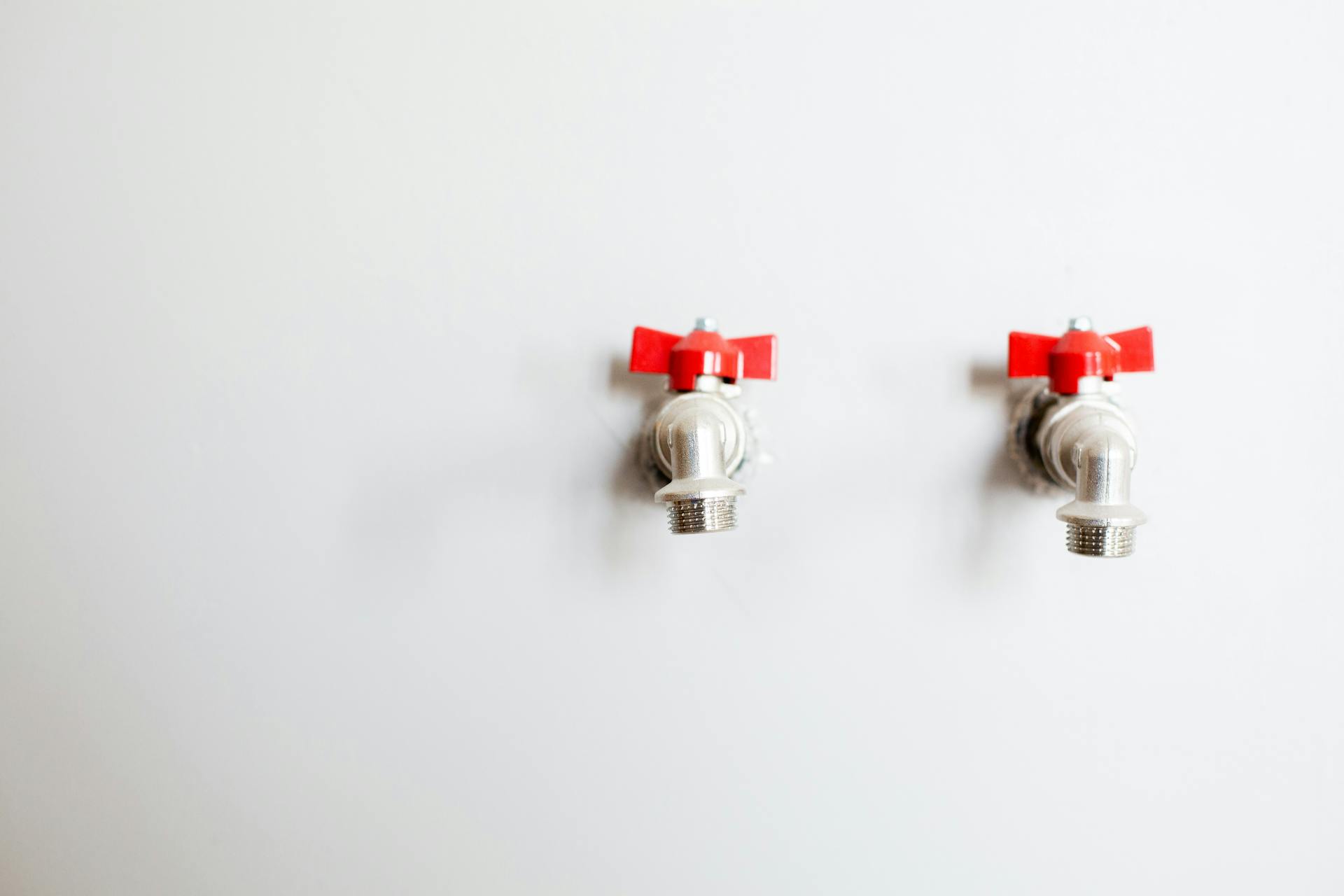
- Turn both the hot and cold supply valves fully open, not most of the way.
- Check the full length of both hoses for kinks, crushing, or a hose trapped behind the machine. Leave clearance behind the unit so vibration cannot pinch its own hoses again.
- Confirm hot connects to hot and cold to cold. A crossed connection triggers a water-supply code on some models rather than an obvious temperature complaint.
- Test a nearby tap on the same supply line to confirm household pressure sits inside Samsung’s 0.5 to 8 bar range.
Clean the inlet screens
- Close both water valves and unplug the washer before touching any connection.
- Disconnect the supply hoses at the washer’s inlet ports. Have towels ready — hoses hold water after the valves are closed.
- Remove the mesh screens from the inlet ports gently. Don’t force or reshape them; a deformed screen won’t seat properly afterwards.
- Rinse until clear, then reconnect hand-tight plus a small final turn with a wrench. Do not overtighten.
Stop-use warning: Never disconnect a supply hose with the valve still open, and never work on connections with the washer plugged in. If water pools at any fitting after reconnecting, stop and reseat it before running a cycle.
Read your result
Each check above produces a fact, and the point of the table is to turn that fact into a direction rather than a to-do list. The most useful line is the last one: a machine that still times out after everything upstream has been confirmed clear has told you something specific, which is that the fault is on the machine side of the inlet port.
| What you observed | What it means | Where to go next |
|---|---|---|
| A valve was part-closed | Cause found, no fault | Open fully, retest |
| Hose kinked or trapped behind the machine | Cause found, and it will recur | Clear it, add clearance behind the unit |
| Screens came out silted or scaled | Confirmed and common | Clean, retest, expect a normal fill |
| Weak flow from a nearby tap on the same line | Household plumbing, not the washer | Pressure or supply, not appliance repair |
| Code appeared right after installation | Installation cause | Recheck supply and drain hose routing |
Display actually reads 4C2 / 4E2 | Crossed hot and cold | Swap the connections, nothing else applies |
| Everything upstream confirmed clear, code returns | Inlet valve or level sensing | Service |
When the checks come up clean
If both valves are confirmed fully open, both hoses are clear, household pressure tests normally and the screens are clean — and the code still returns — the diagnosis has moved inside the machine. What remains is the water inlet valve, or the level sensing the board uses to decide whether the fill worked. Both are electrical, both are tested against model-specific values, and that is exactly where this guide stops rather than guessing.
Do not test the inlet valve against voltage or resistance figures you found outside Samsung’s own materials for your exact model. Part specifications are not assumable across a brand, and an inlet valve from one Samsung family frequently doesn’t match another with a similar body and the same badge. Send the model number to a parts supplier or a technician rather than ordering on a photograph.
If you have a Samsung
4C,4Eand4C1are the same signal shown differently across model generations and regions. There is no diagnostic difference between them.- If you reset, do it once and record what the display showed first. Samsung documents unplugging or switching off at the breaker, waiting for the charge to clear — usually one to five minutes at most — then powering up again. Samsung is also explicit that a reset clears stored error codes without fixing the underlying issue, and the stored code is what a technician would have read.
- Samsung specifies a well-grounded 120V outlet on a 20-amp circuit, and recommends against surge protectors with its washers outright. That matters less for a fill code than for a dead panel, but it is worth knowing before you assume the wall supply is above suspicion.
- Samsung specifies 6 to 8 inches of drain hose insertion into the standpipe. Deeper than that siphons, and a siphoning drain can keep the tub below the level the washer is waiting for.
If it isn’t actually a Samsung
4C and 4E exist only on Samsung machines — but a Kenmore badge doesn’t tell you who built the machine underneath it. Kenmore is a rebadger: model numbers starting 402 are Samsung, 796 are LG, 110 are Whirlpool and 417 are Frigidaire. If your Kenmore is showing this code, it is a Samsung and this page applies unchanged.
If your machine shows a fill code from a different platform, the mechanics on this page are identical — valves, hoses, screens, then the valve inside — even though the code isn’t. LG reports a fill failure as IE. Whirlpool, Maytag, Amana and Kenmore 110 share a control platform and report it as F8E1 or Lo FL. Frigidaire and Kenmore 417 run the Electrolux series and report E11 or E41. The universal version of this diagnosis lives at washing machine not filling with water.
Confirm the repair
- Power-cycle the washer to clear the displayed code, after noting what it was showing.
- Run a short cycle with the drum empty and watch the fill stage.
- Confirm water enters within a normal time and no code reappears.
- Run a warm cycle so both the hot and cold valves are exercised — a cold-only test leaves half the system unchecked.
- Check every connection you touched for drips before returning to a normal load.
If the code returns even once after a clean-looking test, treat that as new evidence rather than a fluke, and go back to the read-your-result table instead of repeating the same fix.
When to stop and call someone
- Valves open, hoses clear, pressure normal and screens clean — and the code still returns.
- Household water is confirmed working normally elsewhere, which rules out a plumbing-side explanation.
- Going further would mean testing electrical components inside the washer.
- You aren’t confident disconnecting and reconnecting a supply hose without risking a leak.
- The code appears alongside water reaching an electrical component, or pooling you can’t account for.
FAQ
Is 4C the same error as 4E?
Yes. Samsung treats 4C, 4E and 4C1 as the same water-supply signal, displayed differently by model and region.
My washer shows 5C or 5E instead.
Different family — that’s drainage, not supply, and none of these checks apply. See Samsung washer 5C or 5E error.
My washer shows 1E — is that related?
No. E1 sits in the not-filling family, but 1E, LE, 1C and LC are Samsung’s water level and leakage group. See Samsung washer LC or LE leak error.
Does this code mean no water at all, or can it mean slow filling?
Either, depending on model — the washer is reporting a level it didn’t reach in time. See washing machine not filling with water for no water, or washing machine fills too slowly if it enters but slowly.
The code cleared after I opened a valve. Should I still worry?
No. A one-time code tied to something you identified and fixed, which hasn’t returned since, is resolved.
Could a badly installed drain hose really cause this?
Yes on some models. Samsung’s regional guidance ties this family to drain installation, and Samsung specifies 6 to 8 inches of standpipe insertion. See washing machine fills then drains for the siphoning version of the problem.