Last Updated on October 5, 2026 by Umar Farooq
A dryer blower wheel is a squirrel cage — a drum of curved plastic or metal vanes threaded onto the back of the motor shaft. It draws air through the drum and the lint screen and pushes it out along the exhaust duct. When it goes wrong, it is usually not because the wheel wore out. It is because something fell down the lint chute and hit it. Coins, buttons, a sock. Whirlpool and Maytag both document that path, and the fix for most of those is a torch and a pair of gloves.
That is why the first section of this page is about looking rather than buying. The blower wheel is one of the few dryer parts where the free check solves the complaint outright a good share of the time, and where the part itself is often the second-order consequence of ignoring it.
Disclosure: washerfixlab.com is a participant in the Amazon Associates Program. If you buy through a link on this page we may earn a commission, at no extra cost to you. We choose products on specification and fit, not on commission, and we say when something is not worth buying.
Look down the lint chute with a torch before you order a dryer blower wheel
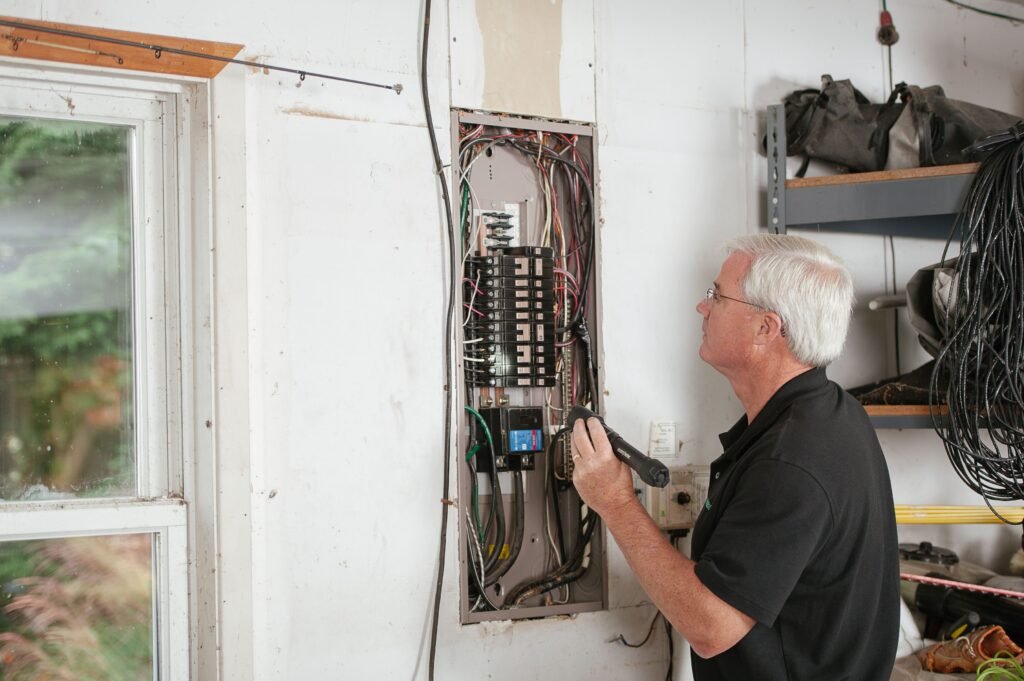
Take the lint screen out. Shine a torch down the slot it came from. That is the whole procedure, and it is the manufacturer’s own.
GE sets it out on its dryer noise page: “Check for foreign objects below the lint filter: Remove the lint filter and look down into the opening.” GE then adds the warning that matters, because the opening is folded sheet metal — “If you need to stick your hand down into the opening to remove an object, be careful because the edges of the opening could be sharp”, and “We advise wearing a pair of work gloves if you do need to reach down and remove an object.”
Maytag names what you are looking for: items like coins, buttons and even socks, which can fall into the chute and hit the blower wheel, causing a rattling or knocking sound. That is the single commonest cause of the noise that brings people to this page, and a pair of long-nose pliers or a vacuum hose usually ends it.
There is a second free one on the same theme. Whirlpool records that the exhaust tube pushing back into the unit too far can itself cause a rattling noise. Pull the dryer out, look at where the duct meets the machine, and make sure the transition is seated rather than rammed home. Two minutes.
If neither of those is it, clean the screen properly before going further, because a blinded screen produces exactly the symptoms people attribute to a failing wheel. How to clean dryer lint trap covers the twice-yearly deep clean — and the detail most guides get backwards, which is that rinsing the screen with water after each load makes the lint harder to remove, not easier.
A squirrel cage on the motor shaft, and what breaks it
Knowing how the wheel is mounted explains every way it fails.
Frigidaire’s own description of the part is the clearest available: the blower wheel and housing assembly “spins on the motor shaft” and blows “air through the dryer drum and out through the exhaust”. Whirlpool describes the wheel as the component that “circulates air within the drum and expels it through the rear vent”. It is not geared, not belted and not independently driven — it is bolted or threaded straight onto the back end of the same motor that turns the drum, so it runs whenever the drum runs.
That direct mounting creates three failure modes and no others worth worrying about.
Impact damage. Something hard arrives at speed and chips a vane or cracks the hub. The wheel then runs out of balance, which produces the knock, and the broken vane moves less air, which produces the slow drying.
A stripped or split hub. The wheel is plastic on most domestic machines and it is threaded or keyed onto a steel shaft. Years of heat cycling make the plastic brittle. Eventually the hub splits or the thread rounds off, and the motor turns inside a wheel that is no longer turning with it — which gives you a dryer that tumbles, heats, and dries nothing at all.
Lint packing. Not a failure of the wheel so much as a failure around it. Lint builds up in the housing and between the vanes, the wheel’s effective depth shrinks, and airflow falls away gradually over a year or two. Nobody can date the start of it, which is why it gets blamed on the heater.
That third one is worth taking seriously rather than treating as housekeeping. NFPA’s research records an estimated average of 13,820 home structure fires a year involving dryers, with 32% caused by a failure to clean and a further 27% by mechanical failures or malfunctions. A lint-packed blower housing sits squarely in the overlap of those two numbers.
Four sounds, and which one is actually the wheel
Dryers make a lot of noise and most of it means something specific. Matching the sound to the part before you buy is most of the diagnosis.
A rattle or a knock — intermittent, often worse when the drum is loaded. That is the foreign-object case. Lint chute first, then the drum itself for coins and zips, then the duct connection.
A roar or a deep rumble that rises and falls with the motor. Whirlpool attributes this one to the blower wheel directly. A wheel that is cracked, out of balance or loose on its shaft will roar rather than rattle, and the noise is continuous rather than periodic.
A squeal or a scrape. That is almost never the blower. GE separates the normal from the abnormal here: a squeak at start-up that goes away within the first few seconds is normal, while a squeak that develops only once the dryer has heated up, or a short chirp repeating every few seconds, is not. Both of those point at drum supports or the idler pulley rather than the wheel. Dryer making loud noise sorts the full set by sound.
No noise at all, and nothing drying. This is the failure people miss, because they are listening for a bang that never comes. A hub that has let go produces a quiet dryer that runs a full cycle and returns damp clothes. If your machine heats properly, tumbles properly and dries nothing, put your hand at the outside wall cap while it runs. GE’s standard is the one to use: “If there is not a strong airflow at the wall cap, it is typically an indication that the duct is obstructed and should be cleared or improved.” Clear duct and no airflow at the cap means the thing that should be pushing air is not.
Dryer taking too long to dry is the page to work through first if drying time is the complaint, because a restricted duct produces the same symptom far more often than a broken wheel does.
The reverse thread that snaps hubs
This is the detail that turns a straightforward part swap into a two-part order, and it is barely mentioned anywhere outside service manuals.
On a number of platforms the blower wheel is threaded directly onto the motor shaft with a left-hand thread. Frigidaire states it plainly in its own drive-motor documentation: the 5304529782 motor “has reverse threads for blower wheel”. The reason is mechanical rather than perverse — a right-hand thread would unscrew itself under the torque of the motor spinning up, so the thread runs the other way so that running the dryer tightens it.
The consequence for you is that if you attack the hub the way your hands expect, you are tightening a plastic component onto a steel shaft that has been heat-cycled for a decade. The hub cracks. At that point the blower wheel job you were investigating has become a blower wheel job you definitely have.
Two practical notes. First, check your service literature or the back of the motor before applying any force, because the thread direction is not universal and guessing is the expensive option. Second, consider whether you are doing this job at the same time as the motor — the wheel and the motor live on the same shaft, so if either is near the end of its life, doing both in one dismantling is the sensible economy. Dryer motor replacement covers that side of it.
A reused wheel that has come off a shaft cleanly is usually fine. A reused wheel with a hairline crack at the hub is a part that will let go in six months, quietly, and hand you back damp clothes with no warning sound at all.
Wheel alone, or wheel and housing?
Blower wheels are sold two ways and the difference is not cosmetic.
A bare wheel is just the squirrel cage, to be fitted into the housing already bolted into your machine. A wheel and housing assembly is the cage already seated in its volute, with the seal and the mounting flange, ready to bolt in as one piece.
Which one you buy is determined by your platform rather than by preference, and this is where the market shape is worth stating honestly: the complete wheel-and-housing assemblies available in this class are overwhelmingly for the Frigidaire and Electrolux chassis. That is where the part is catalogued as a single assembly. On Whirlpool, GE and Samsung machines the wheel is ordered on its own against your model number and the housing stays where it is. If you have one of those, the three products below are not your parts, and the thing to do is read the number off your wheel and order it from a catalogue that lists your model.
The other fitment variable is the housing material. The Garsoo listing below specifies high-temperature-resistant engineering plastic for its housing, which is worth knowing because housings sit directly downstream of the heat source.
And in every case, start from the plate. Whirlpool documents the dryer location as inside the dryer door, on the rim of the opening, with a ventless machine’s plate behind the water tank and a stacked laundry centre’s on the inside of the dryer door. The Kenmore rule applies as always: 110 is Whirlpool, 796 is LG, 417 is Frigidaire, 402 is Samsung.
Three assemblies for the Frigidaire and Electrolux chassis
Three complete wheel-and-housing assemblies, each for a specific part number within that platform. The part number on your existing housing is what decides between them, and nothing else does.
Frigidaire 134690800: the OEM assembly for the later chassis
Frigidaire’s genuine wheel-and-housing assembly, which Frigidaire describes as spinning on the motor shaft to blow air through the drum and out through the exhaust. Its supersession list is the useful part: it replaces 1482914, 7134690800, AH2349262, EA2349262 and PS2349262.
Which machines it covers: Frigidaire-platform dryers calling for 134690800 or any of those superseded numbers, which includes Electrolux and Kenmore 417 machines on the same chassis. This is the best-ranked blower assembly in the category, which is a fair proxy for how many of these machines are out there.
What it does not do: it is not a Whirlpool, GE or Samsung part and will not fit those housings. It also does not come with a motor, so if the hub failed because the shaft is scored, inspect the shaft while everything is apart. This listing shows limited stock at the time of writing.
Garsoo 137552300: the one with the published model list
An aftermarket assembly for 137552300, and the reason to include it is that its listing does the thing most aftermarket listings refuse to do — it names the parts it replaces (3015873, AP5805181, PS8770136 and EAP8770136) and then prints an actual model list. Kenmore 41781100003 and 41781102003; Electrolux EIED50LIW1, EIED50LIW2, EIMED55IIW3, EIMED55IMB3, EIMED55QT0, EIMED60JIW5, EIMED6CLSS4, EWMED7CJIW4 and more besides. The housing is specified as high-temperature-resistant engineering plastic.
Which machines it covers: Frigidaire, Electrolux and Kenmore dryers calling for 137552300, with the model list above as the published evidence. Check yours against it.
What it does not do: one honest flag, because it is the kind of thing that costs someone an order. The listing’s own final bullet tells you to “verify part number 134690800” — a different part, and the first one on this page. That is a copy-paste left in the description rather than a statement about what is in the box. Go by 137552300 and the model list, not by that line. A listing that contradicts itself about part numbers is a listing to read twice.
Frigidaire 131967600: the OEM assembly for the earlier chassis
The other genuine Frigidaire assembly, for the earlier generation of the same platform. It replaces 131775610, 823074, AH418726, EA418726 and PS418726 — a completely separate chain from the 134690800 above, which is the clearest demonstration on this page that one brand does not mean one part.
Which machines it covers: Frigidaire and Electrolux dryers calling for 131967600 or any of its five superseded numbers. If your old housing carries one of those, this is the direct replacement.
What it does not do: the two Frigidaire assemblies on this page look broadly similar in a photograph and are not interchangeable. Order against the number on your housing. This listing also shows limited availability and is the deeper-ranked of the two OEM parts, which reflects a smaller remaining population of those machines rather than anything about the part.
The four readers this part will not help
Anyone who has not looked down the lint chute. Maytag names coins, buttons and socks as the things that get in there and hit the wheel, and GE publishes the procedure for retrieving them. That is a free repair and it is the likeliest one.
Anyone whose dryer is lint-dusting clothes rather than rattling. That is a screen, a seal or a duct question rather than a wheel question — dryer leaving lint on clothes covers it.
Anyone whose duct has not been cleaned. A dryer that has stopped drying is far more often a blocked duct than a broken wheel, and the two produce the same complaint. Hand at the wall cap first.
Anyone with a Whirlpool, GE or Samsung machine looking at the parts above. They are Frigidaire-platform assemblies. Yours is a different part and it is ordered against your model number.
FAQ
What does a failing dryer blower wheel sound like?
A deep roar or rumble that rises and falls with the motor if the wheel is cracked or loose, or a rattle and knock if something is bouncing around inside the housing. Whirlpool attributes the rumble to the blower wheel specifically. A squeal or a scrape is almost always drum supports or the idler pulley instead.
My dryer is quiet but nothing dries. Can that still be the blower wheel?
Yes, and it is the version people miss. If the hub has split, the motor turns inside a wheel that is no longer gripping the shaft, so the machine runs and heats and moves almost no air. Check for strong airflow at the outside wall cap while it runs — GE treats weak flow there as the standard sign of a restriction, and if the duct is clear the blower is the next suspect.
Can I just clean the blower wheel instead of replacing it?
Often, yes. Lint packs between the vanes and inside the housing and that alone costs you airflow. If the wheel comes off intact, clean it thoroughly, inspect the hub for cracks and the vanes for chips, and refit it. Replacement is for a wheel that is damaged, not merely dirty.
Why did my blower wheel break?
Usually impact — something small enough to pass the lint screen slot fell down the chute and struck it at speed. The other common cause is a plastic hub that has become brittle after years of heat cycling and finally split on the shaft.
Is the blower wheel on the motor shaft?
Yes, on domestic dryers it is mounted directly on the back of the drive motor’s shaft, which is why it runs whenever the drum runs. On several platforms it is held by a left-hand thread — Frigidaire documents reverse threads for the blower wheel on its drive motor — so check the direction before applying force or you will crack the hub.
Do I need the housing as well as the wheel?
It depends on the platform. On the Frigidaire and Electrolux chassis the two are catalogued and sold as one assembly, which is what the parts on this page are. On Whirlpool, GE and Samsung machines the wheel is normally ordered on its own and the housing stays in the dryer.
Find the coin first
The order that saves most people a part: lint screen out, torch down the chute, gloves on, and look. Then check the exhaust tube at the back is seated rather than shoved in. Then put your hand at the outside wall cap during a cycle and see whether anything is actually coming out.
If the noise survives all three and it is a roar rather than a squeal, the wheel is a fair suspect. Take the number off the housing and match it against the supersession lists above — the two Frigidaire assemblies are for different generations of the same platform and the photographs will not tell you which is yours. If you have a Whirlpool, GE or Samsung, none of these is your part, and the wheel is ordered on its own.
And whichever you take off, find out which way the thread goes before the wrench comes out.